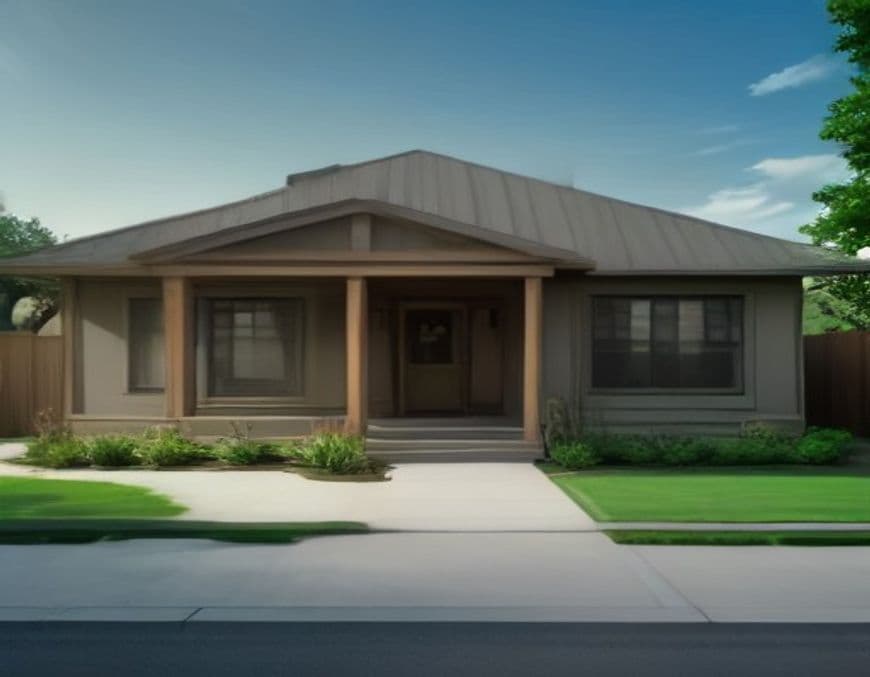
When Jim Halpert secretly bought his parents' house in season five of The Office, it was framed as a grand romantic gesture. It was also an objective nightmare from a real estate standpoint. Shag carpet in the kitchen, framed clown pictures bolted to the wall, and zero professional home inspections. But beyond the questionable interior design choices, one practical question always lingered: Could a mid-level paper salesman and an art-school-dropout office administrator actually afford a single-family home in Scranton on mid-2000s paper sales commission?
Let's run the actual numbers. In 2008, a typical three-bedroom ranch in suburban Scranton, Pennsylvania, ran about $150,000. Assuming Jim took over his parents' mortgage or bought it at fair market value with a standard 10% down payment, he was looking at a loan balance of around $135,000. At 2008 interest rates—around 6%—his monthly payment for principal and interest would have been roughly $810. Add in Scranton's property taxes and basic home insurance, and the total monthly nut likely landed somewhere around $1,150.
Now let's talk income. A mid-tier paper salesman in eastern Pennsylvania in 2008 earned roughly $45,000 to $55,000 annually, depending heavily on commissions. Pam, transitioning from receptionist to office administrator, was probably pulling in around $30,000 to $41,500. Combined, their gross household income sat somewhere around $80,000 to $90,000 a year.
Under standard underwriting guidelines, lenders generally prefer your housing costs to stay below 28% of your gross monthly income. For Jim and Pam, a $1,150 monthly house payment represented roughly 15% to 17% of their monthly income. In plain English? They could easily afford the monthly mortgage payments. In fact, on paper, they were practically thriving by rust-belt housing standards.
The real financial bottleneck wasn't the monthly payment; it was the surprise costs of impulsive home buying:
- Closing costs: Even on a $150k home, lender fees, title insurance, and transfer taxes run about $4,000 to $6,000 out of pocket.
- Immediate renovations: Ripping out kitchen shag carpet, updating electrical systems, and removing framed art costs money that can't be rolled into a standard mortgage.
- Maintenance reserves: Older suburban ranches require continuous upkeep, from aging roofs to ancient HVAC units.
Jim's biggest gamble wasn't the math—it was buying a property without asking his partner or getting a proper contingency clause. But pure math-wise, mid-2000s Scranton was one of the most affordable markets in the country. A couple with two stable office jobs could comfortably buy a starter home without sinking their financial future.
If you're trying to figure out what your income translates to in today's real estate market, you don't have to buy your parents' place sight unseen — run your own numbers through our HELOC calculator instead.